There's a specific silence that falls over an office when HR announces the third escape room of the year. Team bonding doesn't fail because people hate fun — it fails because the activity has no stakes, no noise, and nothing to talk about at lunch the next day. The fix is simple: give the night a leaderboard. Here are five formats we've watched work across eight years of company nights, with the mechanics to run them and the honest math to budget them.
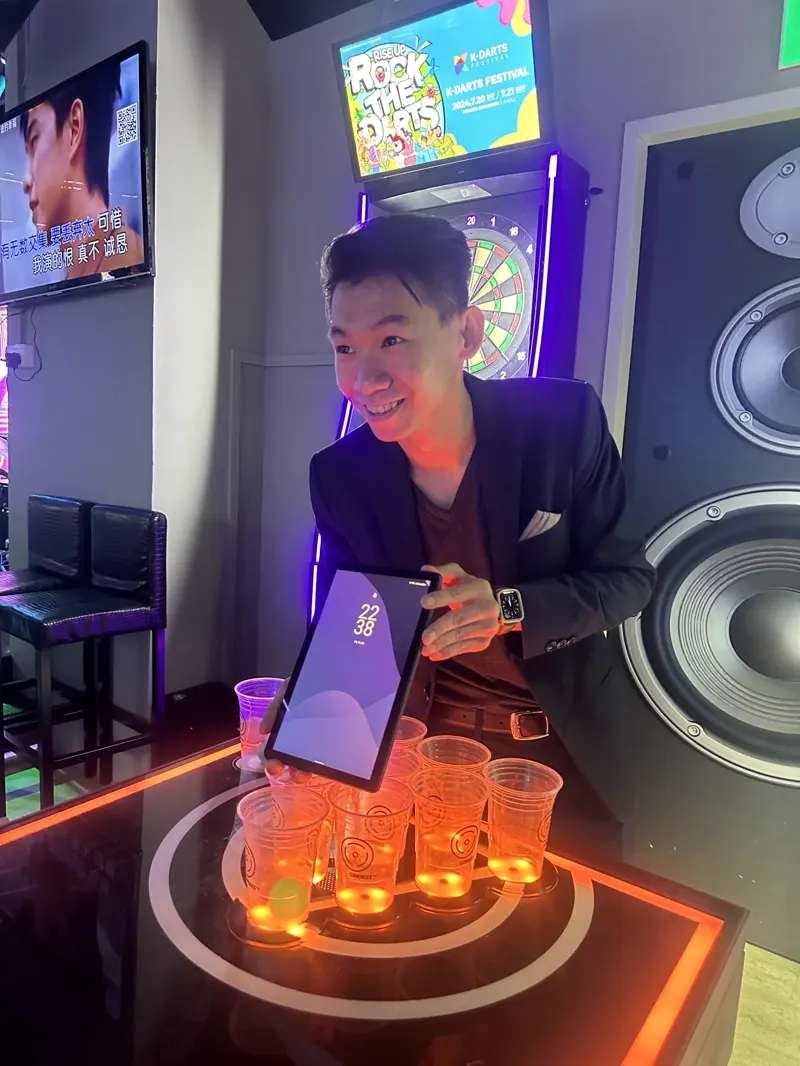
Electronic darts score themselves — which is exactly what you want when the second tower arrives.
1. The karaoke tournament 一起唱
The format: teams of 4–6, each team submits two songs. Round one, every team performs once; the bottom half sings a "redemption duet" round; finals are decided by crowd volume (a phone decibel app makes it official and hilarious). Ninety minutes, start to trophy.
Why it works: singing badly together is the fastest trust exercise ever invented. The intern who murders a Jay Chou ballad next to the finance director has done more for cross-department relations than any workshop.
Run it well: ban rehearsals, seed the brave teams apart, and make the boss judge — not compete.
2. The darts league
The format: electronic dartboards score automatically, so run a round-robin: pairs, 501 or cricket, 15 minutes a match. Post the standings somewhere visible and watch people who "weren't staying long" hang around for their semifinal.
Why it works: darts is the great equaliser — nobody's gym membership helps. Auto-scoring keeps it moving and argument-free.
3. The beer-pong bracket (with a soft-drink division)
The format: single-elimination bracket, teams of two, LED table if you can get one. Crucially: run a parallel soft-drink division with identical rules and an equal trophy, so the non-drinkers are competitors, not spectators.
Why it works: it's the only sport where the crowd matters more than the players. Semifinals onwards, the whole night gathers around one table.
4. The arcade & claw challenge
The format: give each team a stack of tokens and a scavenger scorecard — highest arcade score, first claw-machine win, best retro-game photo. Score it over the whole evening in the background of everything else.
Why it works: it gives the quieter colleagues a lane. Not everyone wants a microphone; some people just want to demolish the office at retro racing. Ask our team to confirm arcade arrangements and any separate quote.
5. The live-band singalong finale
The format: if your venue has a live band, end the night by sending your bravest up to sing with them. At our place the band expects it — guests on stage is the feature, not an interruption.
Why it works: a live-band finale gives the night an ending. People remember endings; that's what gets retold on Monday.
How to pick between the five
Match the format to the team you actually have, not the team the org chart implies:
- New or recently merged team? Karaoke tournament. Shared embarrassment builds bridges faster than shared success.
- Competitive sales-floor energy? Beer-pong bracket or darts league — give them a scoreboard before they invent one anyway.
- Wide age range or mixed seniority? Arcade challenge as the spine, karaoke as the optional extra. Everyone finds a lane, nobody's forced onto a stage.
- Quiet, heads-down team? Darts round-robin. Low noise floor, high talk-while-you-wait time — it's the format that generates the most actual conversation.
- Celebrating something big? All of it, plus the live-band finale. Ask our team about arrangements for your company event.
One more planning note: cap the formal programme at zero. Team bonding nights die the moment someone opens a slide deck. If leadership must speak, it's a toast — thirty seconds, glass in hand, done.
Planning your budget
Explore the four approved corporate packages, then share your requirements with the team for a quotation. Buffet is excluded from base packages. Catering is available separately from S$20/pax. Package interest records your preference only.
Getting people to actually turn up
Attendance is won before the invite goes out. Hold the night on company time where you can — a 5pm start on a Thursday beats "optional, 8pm, Saturday" by a mile. Name the format in the invite ("Darts League Night", not "Team Bonding Session") so people know there's a plan and not a trust fall. And publish the teams in advance: once someone knows they're seeded into Team Kopi with two colleagues they like and one they're curious about, skipping feels like letting real people down, not dodging an HR calendar block.
Whatever you run, do these three things
- Mixed teams, drawn from a hat. The point is meeting people you don't sit beside. Don't let departments self-sort.
- Real trophies. A $30 plastic trophy on someone's desk outlasts any e-voucher in the company's memory.
- Feed people early. A buffet line open from the first hour keeps the games sharp. Halal-certified catering is available through our external catering partners. The caterer, current certification, menu and quotation will be confirmed for each event before booking.
Ready to run a night with an actual leaderboard?
Tell us your headcount and date. Our team will confirm the suitable package, catering options, layout, availability and quotation.
Share your event details